
Herringbone or Hungarian Point: what are the differences?

These days, floors laid in straight lines are becoming less common. Instead, many people opt for a distinctive laying pattern, such as herringbone, Hungarian point, or large format whalebone. These patterns give a room character and luxury, but differ significantly in appearance, tranquility, and application. In this article, you will read about the differences between herringbone and Hungarian point floors, including tips and the choice between laminate and PVC.
Herringbone flooring
Herringbone is a pattern with a rich history and has been used for generations. The pattern consists of rectangular planks laid at right angles to each other, creating a lively zigzag pattern. Herringbone fits both classic and modern interiors and gives a room a playful and dynamic character.
Herringbone is usually laid at a 45-degree angle, but can also be laid straight as an elbow bond. Due to the many lines and angles, the pattern attracts a lot of attention, making it particularly suitable for rooms where the floor can truly make a statement.
A larger variant of this pattern is known as whalebone. This term was introduced in 2018 by the brand Floer and refers to XL-sized herringbone planks.
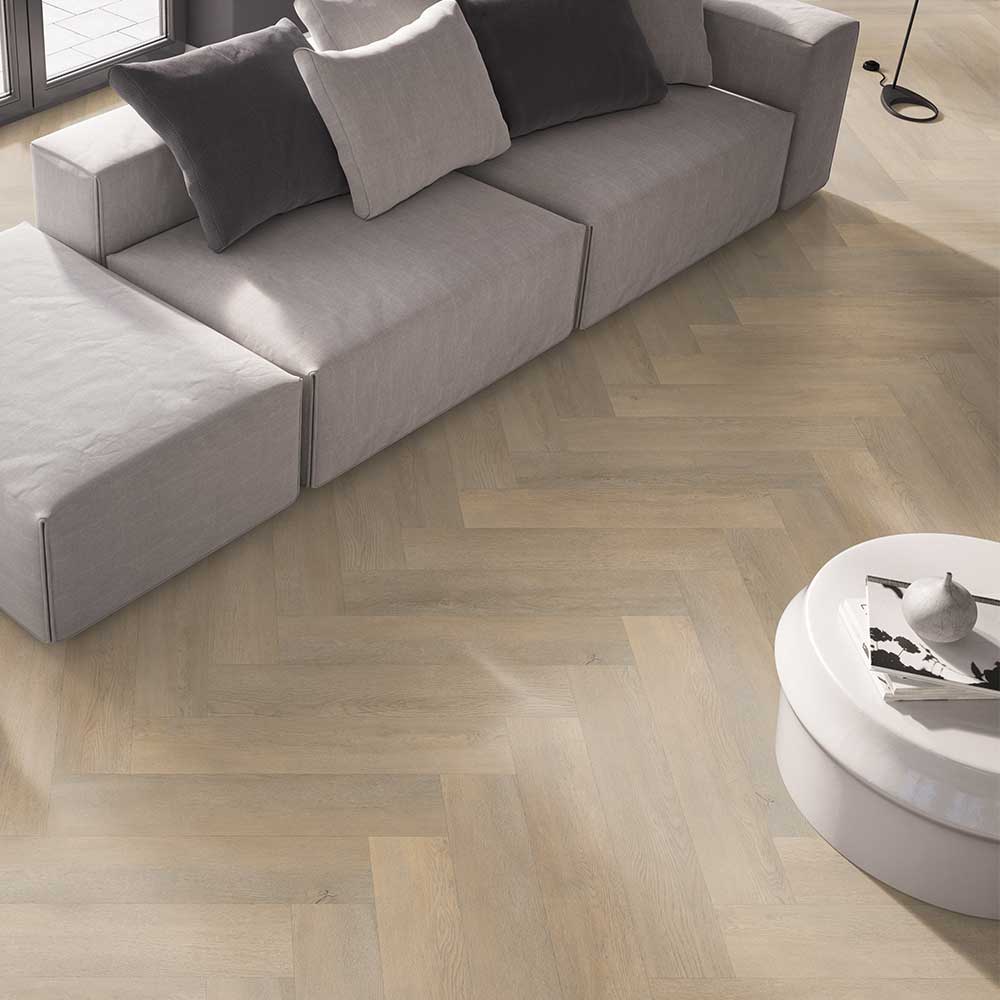
Photo: example of herringbone PVC flooring
Hungarian point flooring
The Hungarian point resembles herringbone but differs significantly in laying method and appearance. The planks are cut at an angle at the ends and laid against each other in a clean V-shape. This creates a symmetrical pattern with a clear focal point, often described as an 'arrow' effect.
Because of this symmetry, a Hungarian point appears calmer and more orderly than herringbone. The pattern is present but less playful. This makes the Hungarian point particularly suitable for modern, minimalist interiors or for rooms where you want character but not a busy look.
In addition, the cutting work for Hungarian point is often more consistent because the end edges fit together perfectly. However, this pattern requires high dimensional stability of the floor, as deviations are more quickly visible.
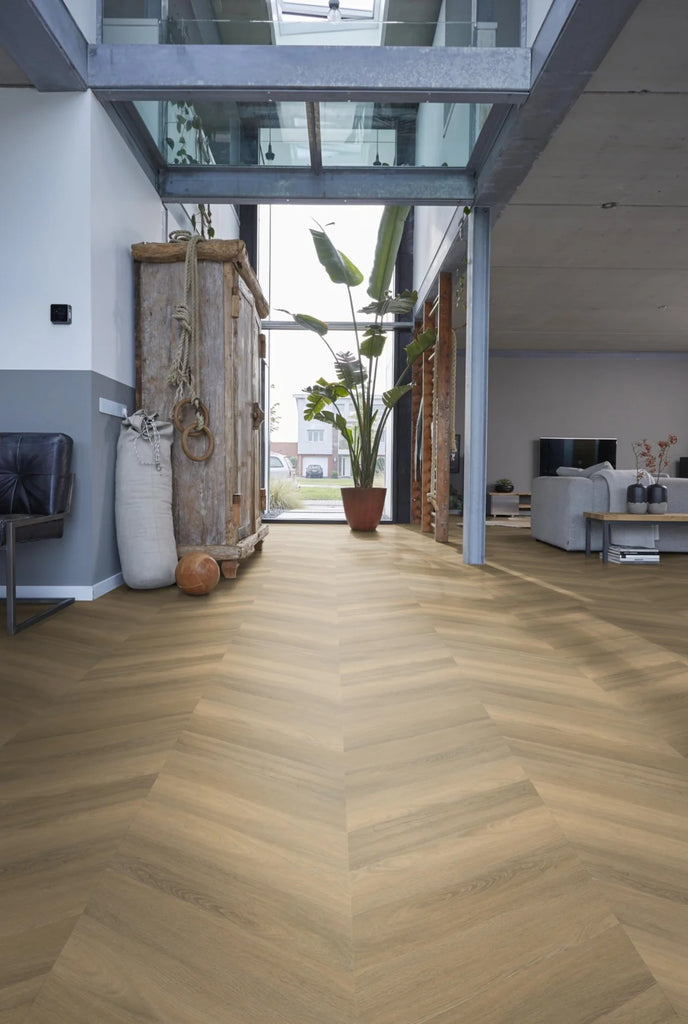
Photo: Floorlife adhesive PVC Hungarian point flooring
What is the difference in appearance?
- Herringbone is lively and dynamic. The pattern attracts a lot of attention and can give a room extra energy.
- Hungarian point is calmer and cleaner due to its symmetry and fixed lines.
In large rooms, both patterns come into their own. In smaller rooms or apartments, Hungarian point is often perceived as calmer, while herringbone can sometimes appear a bit busy.
Which floor do you choose?
Whether herringbone or Hungarian point is more beautiful cannot be objectively stated. It remains a matter of taste. However, there are practical differences to consider in your choice.
Herringbone floors are more common than Hungarian point floors. This means there is often more choice in colors, oak prints, and plank sizes for herringbone. There is also slightly more room for correction when laying the planks.
For Hungarian point, dimensional stability is extra important. If the floor is not sufficiently stable, this can lead to gaps or a misaligned pattern. The quality of the brand plays a major role here. Therefore, preferably choose renowned brands such as Floer, Floorify, Vivafloors, Floorlife, vtwonen or Quick-Step.
Whalebone: XL herringbone
Whalebone, also known as XL herringbone, is a variant of the herringbone pattern with extra large and long planks. The effect is calmer than standard herringbone, but still distinct and luxurious. Whalebone is particularly effective in larger spaces, where the pattern can fill the room without being overwhelming.
Very popular whalebone floors include:
- Floer Orka Untreated Whalebone Adhesive PVC
- Belakos Palazzo Herringbone XL 72 Dryback PVC
- Floer Whalebone Adhesive PVC Northern Bottlenose Nature
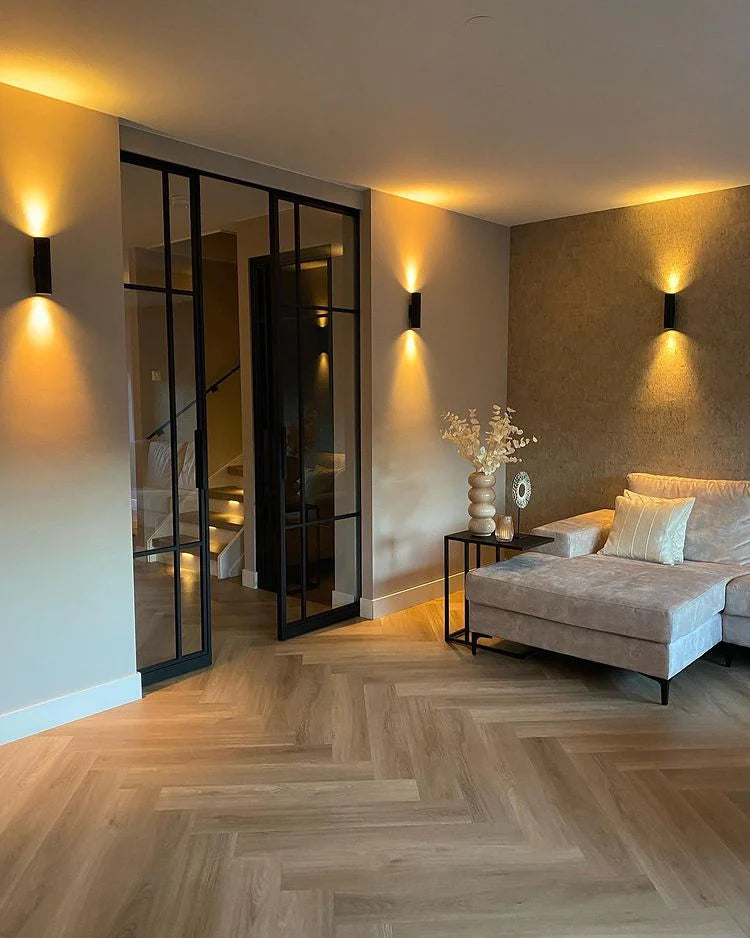
Photo: Whalebone Orca extra matte PVC
Laminate or PVC?
- Laminate is generally the most affordable choice and relatively easy to install. The print layer can provide a realistic wood look, but laminate is more sensitive to moisture and wear. It is harder to walk on and produces more impact noise. Within laminate, Quick-Step is the top brand.
- PVC is water-resistant, durable, and comfortable to use. It is very suitable for high-traffic areas such as living rooms and kitchens. You can choose between adhesive PVC (glued, most durable) or click PVC (faster to install). PVC is also excellent for combining with underfloor heating.
Conclusion
Herringbone, Hungarian point, and whalebone each have their own appearance and advantages. Herringbone is playful and dynamic, Hungarian point is calmer and symmetrical, and whalebone is ideal for larger spaces where you want to make an impact. Whether you choose laminate or PVC, both materials offer plenty of possibilities within these patterns.
Flooring store Solza for tailored advice
Would you like to know more about these flooring patterns or do you need advice for your specific situation? Please contact us or visit our showroom in Alphen aan den Rijn. We are an official dealer of Quick-Step laminate, Floorify PVC, and Floer whalebone PVC. Be sure to also take a look at our complete Hungarian point guide.
Meer uit de kennisbank
 LegpatronenHerringbone Buying Guide: what to look out for?
 LegpatronenViennese point inspiration
 LegpatronenViennese point trends: the most popular styles right now
Liever even overleggen?
Bel of loop binnen in onze showroom in Alphen aan den Rijn.

